



Medically reviewed by Thomas Freeman, MD | Reviewed July 2026
I get some version of the same question almost every week in my office: “What is shoulder replacement surgery, and how would I know if I’m a candidate?” The question usually comes from someone who’s spent years compensating, favoring the other arm, avoiding certain movements, before finally deciding the shoulder isn’t going to fix itself. Here in Traverse City, that often means someone who’s still active, still working, still trying to get through cherry season or a summer on the water. In this post, we’ll take a closer look at what shoulder replacement surgery is and what it actually involves.
Key Takeaways
- Shoulder replacement surgery replaces worn cartilage and bone in the ball-and-socket joint, most often because of arthritis.
- There are two main types, total (anatomic) and reverse shoulder replacement, and they solve different problems.
- Non-surgical treatment almost always comes first. Surgery enters the conversation when pain and function stop responding to it.
- Modern implant planning, including the InSet® system I use, is built around each patient’s own anatomy rather than a single generic shape.
What’s Actually Going Wrong Inside the Joint
Your shoulder is a ball-and-socket joint made up of three bones: the humerus, the scapula, and the clavicle. The rounded top of the humerus is the ball. A shallow part of the scapula called the glenoid is the socket. Both surfaces are coated in a smooth lining called articular cartilage, which is what lets the joint glide instead of grind.
A group of tendons called the rotator cuff wraps around the joint and, together with the deltoid muscle, both stabilizes it and drives most of its motion. The shoulder has more range of motion than almost any other joint in the body, which is part of why problems there show up in so many different ways, from a dull ache reaching for a seatbelt to a sharp catch trying to lift a kayak onto a rack.
Over time, that cartilage can wear down. Sometimes it wears out completely. Once the joint surfaces lose their smooth lining, motion stops being painless, and for a lot of people that’s the first real sign something structural has changed rather than something that will resolve with rest.
Why Replacement Gets Recommended in the First Place
The most common reason I bring up shoulder replacement is arthritis, whether it’s ordinary wear-and-tear osteoarthritis, rheumatoid arthritis, or arthritis that developed years after an old fracture or rotator cuff tear that was never fully repaired. Each has a slightly different story, but they land in a similar place: cartilage breakdown, bone-on-bone contact, and pain that gets in the way of ordinary life.
Treatment almost never starts with surgery. Physical therapy, activity modification, and anti-inflammatory medication or the occasional corticosteroid injection come first, and for a meaningful number of patients that’s enough to keep things manageable for years.
Surgery becomes a real conversation when those tools stop working. When sleep is disrupted because there’s no comfortable position for the shoulder, when getting dressed or reaching behind your back has become a two-handed project, or when the activities that make life worth living up here, golf, boating, hauling gear, are consistently off the table, that’s usually when I’ll recommend a shoulder replacement evaluation.
Total Shoulder Replacement vs. Reverse Shoulder Replacement
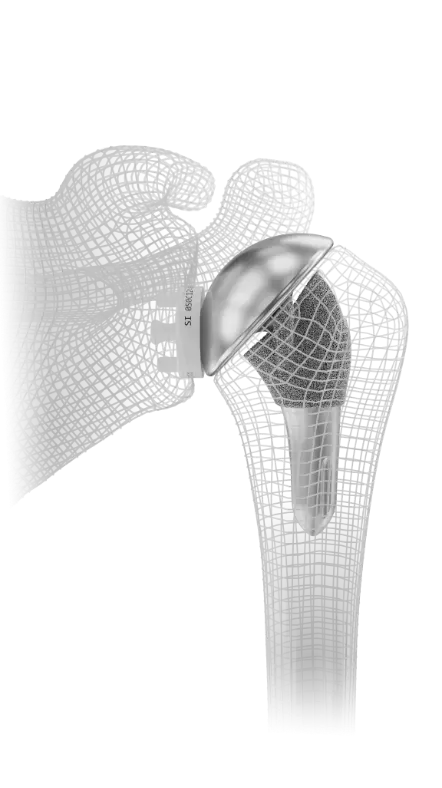
Patients are often surprised to learn there isn’t just one kind of shoulder replacement. A total shoulder replacement resurfaces both sides of the joint in their normal, anatomic configuration. It works well when the rotator cuff is intact and healthy enough to move the new joint the way it would have moved the old one.
A reverse shoulder replacement flips that configuration. The ball goes on the glenoid side and the socket goes on the humeral side. It sounds like a small mechanical detail, but it changes everything about who the surgery works for. Reverse replacement lets the deltoid muscle do more of the lifting instead of the rotator cuff, which matters enormously for patients whose rotator cuff is too damaged to support a standard implant.
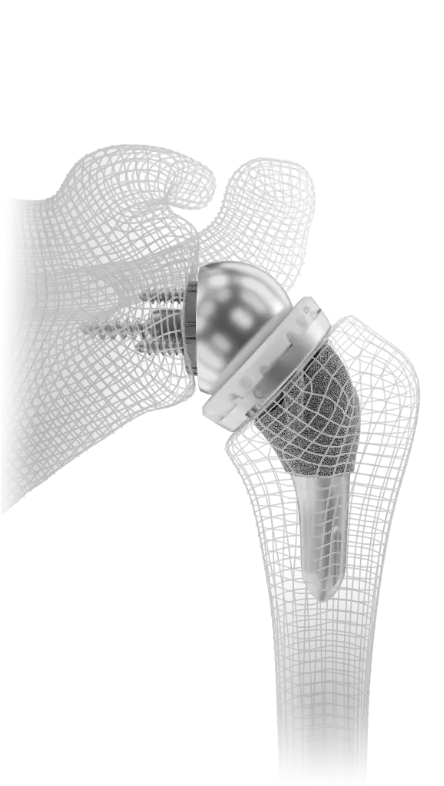
Each version is built for different anatomy and different problems, and part of my job is figuring out which one actually fits the shoulder in front of me.
What I See in My Patients
Traverse City doesn’t have a lot of people sitting still. I see orchard operators who’ve spent thirty years reaching overhead during cherry harvest, marina and dock workers who spend summer cranking winches and hauling lines, and a fair number of cross-country skiers who show up in January still trying to push through the Vasa Trail on a shoulder that’s been telling them no for two seasons. What they tend to have in common isn’t age, it’s that they’ve been compensating so long they’ve forgotten what a shoulder that doesn’t hurt actually feels like.
I’ve also noticed that the patients who wait the longest aren’t in denial about their pain. They’re worried surgery means giving up the exact activities that brought them in. My honest opinion, after watching a lot of these recoveries play out, is that the waiting may cost more function than the surgery does. A shoulder that’s been guarded and underused for two or three years can take longer to rehab than one that gets addressed while the surrounding muscles are still doing their job.
My Approach to Treatment
I start every shoulder replacement conversation with a physical examination followed by imaging, usually X-rays first, and an MRI or CT scan if I need a clearer picture of the rotator cuff or bone stock.
When surgery is the right call, I use the InSet® Total Shoulder system or the InSet® Reverse Shoulder system along with ProVoyance® planning software, which converts a patient’s CT scan into a 3D model of their own shoulder before I ever step into the operating room. I plan implant position and size against that model rather than eyeballing it intraoperatively. I also lean toward bone-preserving implant options when the anatomy allows it, because I’d rather leave a patient with more options if a second procedure is ever needed down the road.
Someone who wants to get back to eighteen holes has different priorities than someone who mainly wants to sleep through the night without their arm waking them up, and I plan around what matters to the person in front of me, not a generic recovery script.
What to Expect Around Surgery
Once we’ve settled on total or reverse replacement, most patients go through a similar sequence. There’s a pre-surgical visit to go over the 3D plan, instructions to hold off on alcohol for a few weeks beforehand, and a conversation about any medications or supplements that need to be paused.
Surgery itself is done under general anesthesia, often with a nerve block placed beforehand to manage pain in the first day or two. Most patients go home the same day or after one night rather than an extended hospital stay, which surprises people who remember a relative’s joint replacement from twenty years ago. The bigger shift happens over the following weeks: a sling initially, then a graded therapy program that moves from passive motion to active motion to strengthening, usually spaced out over a few months rather than compressed into a few weeks.
Summary
If reaching behind your back, sleeping on that side, or getting through a round of golf has turned into a daily negotiation with your shoulder, the next useful step isn’t more research from home, it’s scheduling a visit. Bring whatever X-rays or MRIs you already have if you’ve had them taken elsewhere, and we’ll discuss what the best next steps may look like for you.
Frequently Asked Questions
How do I know if I need a total or reverse shoulder replacement?
That depends mainly on the condition of your rotator cuff and the pattern of arthritis on imaging. A physical exam combined with X-rays, and sometimes an MRI, usually answers the question. It isn’t something you can determine from symptoms alone.
How long does recovery from shoulder replacement take?
Maximal recovery can take up to a year or longer, but many of my patients experience significant improvements in pain and function much earlier, usually within a few months of the procedure.
Is shoulder replacement surgery painful?
There’s expected discomfort after surgery, and most patients need pain management and a sling for a period of time. Pain generally improves steadily as therapy progresses.
Will I need physical therapy after shoulder replacement?
Yes. Regaining motion and strength depends on a structured rehab program, and skipping or rushing it tends to slow recovery rather than speed it up.