
Knee Specialist in Traverse City, Michigan
Our Services
Please call us at
(231) 935-0900
for an appointment
The knee supports body weight while allowing the leg to bend, straighten, and rotate. An injury or joint condition can affect walking, climbing stairs, working, exercising, or participating in sports. Knee symptoms may begin after a sudden injury or develop gradually from repeated use, cartilage changes, or previous trauma.
Dr. Thomas Freeman is a board-certified orthopedic surgeon with fellowship training in sports medicine and shoulder surgery. He evaluates and treats knee conditions in adult and pediatric patients, including ACL tears, meniscus tears, patellar instability, tendon tears, arthritis, and fractures.
Treatment is based on the diagnosis, extent of the injury, symptoms, activity needs, overall health, and individual goals. Options may include activity modification, physical therapy, medications, injections, bracing, arthroscopic surgery, tendon repair, ligament reconstruction, or fracture treatment.
Dr. Freeman sees patients from Traverse City, Northern Michigan, and communities throughout the Great Lakes region.
Understanding the Knee
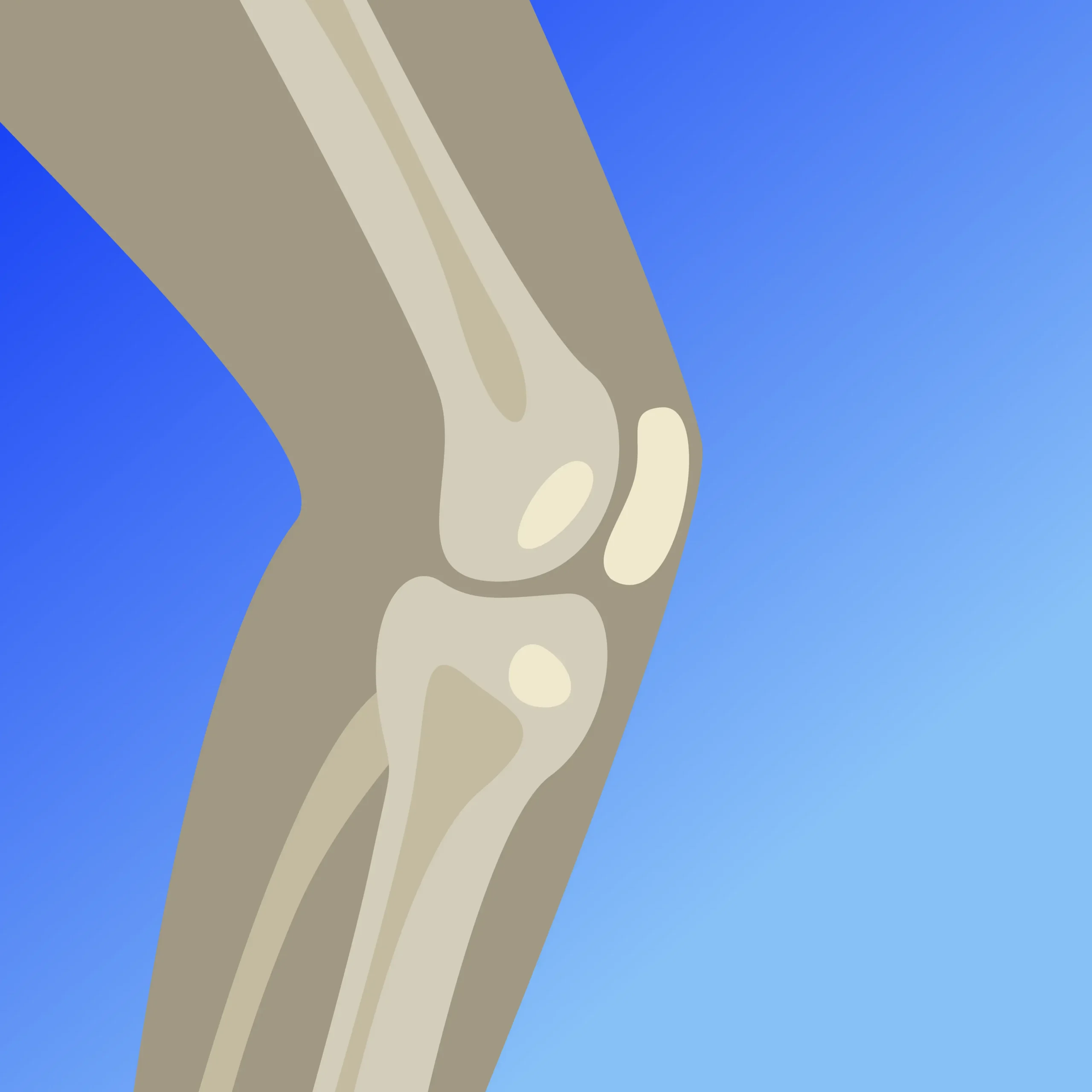
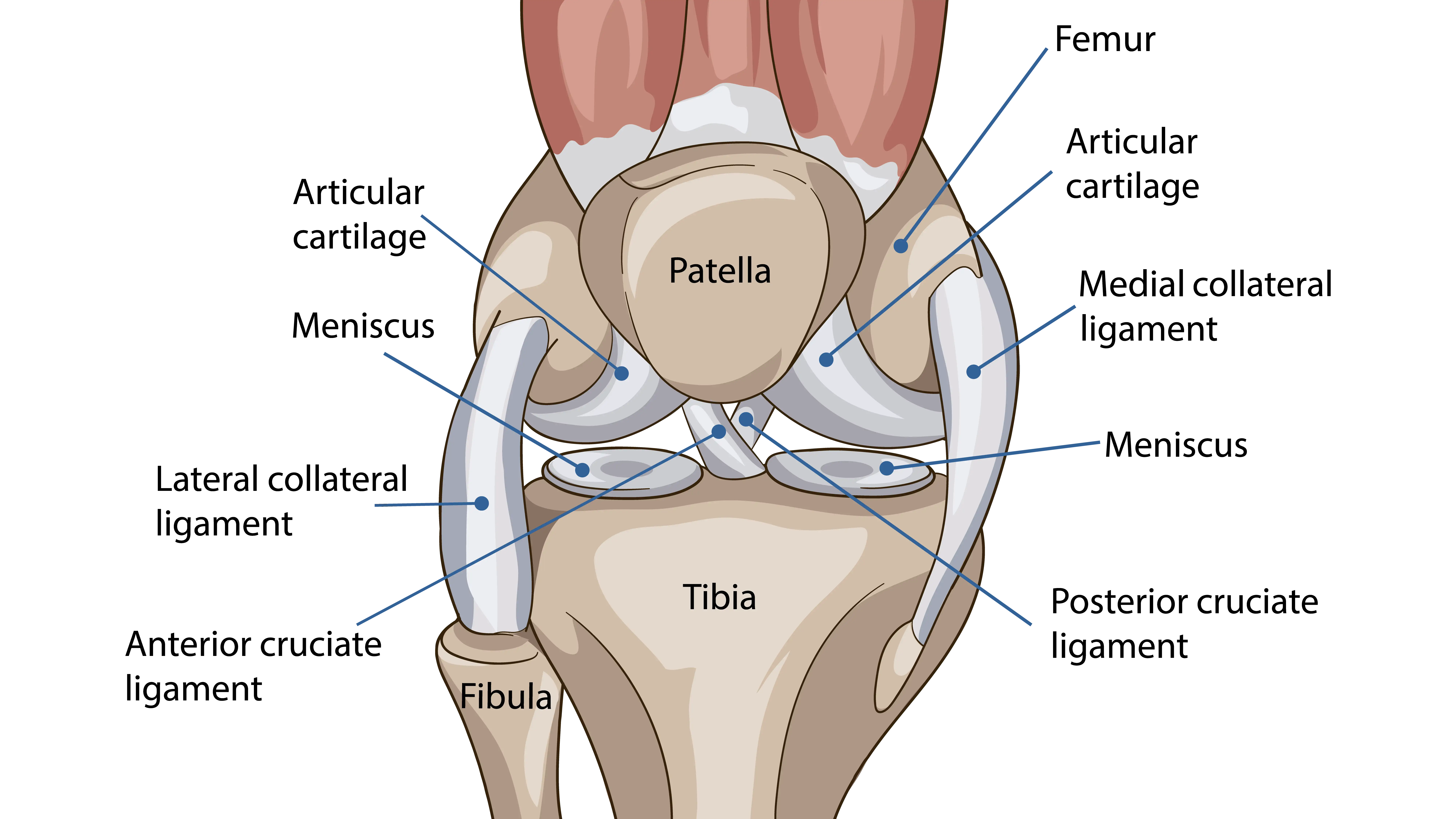
The knee is formed where three bones meet:
- The femur, or thighbone
- The tibia, or shinbone
- The patella, or kneecap
The ends of the femur and tibia are covered with articular cartilage. This smooth tissue allows the bones to move against one another with limited friction. Cartilage also covers the back of the kneecap as it moves within a groove at the end of the femur.
Several other structures support the knee.
The medial and lateral menisci are curved pieces of cartilage located between the femur and tibia. They help distribute weight across the joint and contribute to stability.
Four primary ligaments help stabilize the knee:
- The anterior cruciate ligament, or ACL
- The posterior cruciate ligament, or PCL
- The medial collateral ligament, or MCL
- The lateral collateral ligament, or LCL
The ACL and PCL help control forward and backward movement of the tibia. The collateral ligaments support the sides of the knee.
Tendons connect muscles to bones. The quadriceps tendon connects the muscles at the front of the thigh to the kneecap. The patellar tendon connects the kneecap to the tibia.
Together, these tissues allow the knee to straighten and support the body during standing, walking, running, and jumping.
When to See a Knee Specialist
Temporary knee soreness may improve with rest and activity changes. An orthopedic evaluation may be appropriate when symptoms continue, worsen, or interfere with normal activities.
Reasons to see a knee specialist may include:
- Pain that does not improve
- Swelling that continues or returns
- Difficulty bending or straightening the knee
- A popping sensation at the time of an injury
- Locking, catching, or clicking
- A feeling that the knee may buckle or give way
- Repeated kneecap dislocations
- Difficulty placing weight on the leg
- Pain with stairs, squatting, running, or jumping
- Weakness when straightening the knee
- A visible change in the position or shape of the knee
- Symptoms following a fall, collision, or sports injury
Sudden deformity, inability to bear weight, numbness, or loss of knee movement after an injury may require prompt medical evaluation.
Knee Conditions Treated
Different knee conditions can cause similar symptoms. An evaluation may include a discussion of how the symptoms began, a physical examination, X-rays, and other imaging when appropriate.
ACL Tears
The anterior cruciate ligament helps control forward movement and rotation of the knee. An ACL tear often occurs during a sudden change in direction, awkward landing, rapid stop, or direct collision.
Some patients hear or feel a pop when the injury occurs. The knee may swell within several hours and feel unstable when turning or changing direction.
Treatment depends on:
- Whether the ACL is partially or completely torn
- The degree of knee instability
- Other injuries within the knee
- Age and skeletal maturity
- Activity level
- Sports or work demands
- Personal goals
Some ACL injuries may be managed with physical therapy, bracing, and activity changes. ACL reconstruction may be considered when instability continues or when a patient plans to return to activities that involve cutting, pivoting, or rapid changes in direction.
Meniscus Tears
The menisci help distribute force and support the knee. A meniscus may tear during a twisting injury or as the tissue changes over time.
Possible symptoms include:
- Pain along the joint line
- Swelling
- Stiffness
- Catching or locking
- Difficulty fully bending or straightening the knee
- Pain with twisting or squatting
Not every meniscus tear requires surgery. Treatment depends on the tear’s location, pattern, size, symptoms, blood supply, and associated knee injuries.
Options may include activity modification, physical therapy, medication, or arthroscopic surgery. When surgery is considered, preserving and repairing the meniscus may be preferred when the tear pattern and tissue allow it. Some tears cannot be repaired and may require removal of a limited portion of damaged tissue.
Patellar Instability
Patellar instability occurs when the kneecap moves partially or completely out of its normal groove. A complete displacement is called a patellar dislocation. A partial displacement is called a subluxation.
Instability may begin after a direct injury or a twisting movement. It can also be related to the shape and alignment of the knee, ligament looseness, muscle control, or a previous dislocation.
Possible symptoms include:
- A feeling that the kneecap is shifting
- Pain at the front of the knee
- Swelling
- Difficulty bending the knee
- Repeated dislocations
- Apprehension during certain movements
First-time dislocations are often treated without surgery, depending on the associated damage. Treatment may include bracing, activity modification, and physical therapy.
Surgery may be discussed for repeated instability, cartilage or bone injury, or anatomical factors that contribute to continued dislocation. The type of procedure depends on the structures involved.
Knee Arthritis
Knee arthritis occurs when the cartilage covering the joint surfaces becomes damaged or worn. Osteoarthritis may develop gradually with age, previous injury, alignment differences, or repeated stress on the joint. Inflammatory conditions can also affect the knee.
Possible symptoms include:
- Pain with walking or standing
- Stiffness
- Swelling
- Grinding or catching
- Reduced knee motion
- Pain after activity
- Difficulty with stairs or rising from a chair
Treatment may include activity modification, weight management when appropriate, physical therapy, medication, bracing, or injections. Dr. Freeman’s knee care focuses on sports medicine, nonsurgical treatment, arthroscopy, reconstruction, and joint preservation.
Quadriceps Tendon Tears
The quadriceps tendon connects the muscles at the front of the thigh to the kneecap. This tendon is part of the system that allows the knee to straighten.
A quadriceps tendon tear may occur during a fall, forceful landing, or sudden contraction of the thigh muscles. Tendon changes or certain medical conditions may also increase the risk of injury.
A complete tear may cause:
- Pain above the kneecap
- Swelling or bruising
- A gap above the kneecap
- Difficulty straightening the knee
- Difficulty walking
Partial tears may be treated with bracing and rehabilitation in selected cases. Complete tears often require surgical evaluation because the tendon may no longer be able to perform its normal function.
Patellar Tendon Tears
The patellar tendon connects the kneecap to the shinbone. It works with the quadriceps tendon to straighten the knee.
A tear may occur after a forceful landing, fall, or direct injury. Symptoms can include pain below the kneecap, swelling, weakness, and difficulty straightening the leg.
Treatment depends on whether the tear is partial or complete, the tendon’s condition, and how long the injury has been present.
Knee Fractures
A knee fracture may involve the patella, lower end of the femur, or upper end of the tibia. These injuries may occur during a fall, sports injury, motor vehicle accident, or direct impact.
Possible signs include:
- Sudden pain
- Swelling
- Bruising
- Inability to bear weight
- Difficulty bending or straightening the knee
- Visible deformity
- Tenderness over the injured bone
X-rays are commonly used to evaluate a suspected fracture. A CT scan or other imaging may be recommended for certain fracture patterns.
Some fractures may be treated with a brace, cast, activity restrictions, and follow-up imaging. Surgery may be considered when the fracture is displaced, unstable, or affects the joint surface.
Nonsurgical Knee Treatment Options
Many knee conditions can be treated without surgery. The recommended plan depends on the diagnosis and severity of the condition.
Activity Modification
Temporarily changing activities may reduce stress on an injured or irritated knee. This may include limiting running, jumping, squatting, pivoting, or other movements based on the diagnosis.
Physical Therapy
Physical therapy may focus on:
- Knee motion
- Leg strength
- Balance
- Neuromuscular control
- Hip and core strength
- Walking or running mechanics
- Sport-specific movement
The rehabilitation program used for an ACL injury may differ from one used for arthritis, patellar instability, or a meniscus tear.
Bracing
A brace may be considered for certain ligament injuries, patellar instability, arthritis, fractures, or tendon injuries. The type and length of use depend on the condition.
Medications
Certain medications may be used to manage pain or inflammation. Whether a medication is appropriate depends on the patient’s health history, other prescriptions, and possible side effects.
Corticosteroid Injections
Corticosteroids are anti-inflammatory medications. An injection into the knee joint may temporarily reduce inflammation and pain associated with certain conditions, including arthritis.
The response and duration vary. Repeated injections may have limitations and potential risks that should be discussed before treatment.
Viscosupplementation Injections
Viscosupplementation involves injecting hyaluronic acid into the knee joint. Hyaluronic acid is a substance found naturally in joint fluid.
These injections may be considered for certain patients with knee arthritis. Research regarding their effectiveness has produced mixed results. Dr. Freeman considers the diagnosis, previous treatment, symptoms, and available evidence when discussing viscosupplementation.
Platelet-Rich Plasma Injections
Platelet-rich plasma, or PRP, is prepared from a sample of the patient’s blood. The sample is processed to concentrate the platelets before the solution is injected into the treatment area.
PRP may be considered for certain tendon conditions and mild to moderate knee arthritis. It cannot repair every meniscus, ligament, tendon, or cartilage injury.
Knee Arthroscopy
Knee arthroscopy is a surgical approach that uses a small camera and specialized instruments inserted through small incisions.
Depending on the diagnosis, arthroscopy may be used for:
- Meniscus repair
- Treatment of certain meniscus tears
- Evaluation or treatment of cartilage injuries
- Removal of loose pieces of cartilage or bone
- Certain procedures performed with ligament reconstruction
- Treatment of selected causes of locking or catching
Arthroscopy is not appropriate for every source of knee pain. It is also not generally used to treat arthritis alone.
Recovery depends on the procedure performed. A meniscus repair usually requires different restrictions than removal of a small portion of damaged meniscus tissue.
ACL Reconstruction
ACL reconstruction may be considered when a torn ACL causes continued instability or limits participation in certain activities.
During reconstruction, the damaged ACL is replaced with a tissue graft. The graft may come from the patient or a donor. The graft choice depends on age, anatomy, activity level, sport, and other individual factors.
If the meniscus, cartilage, or another ligament is also injured, those structures may be addressed during the same procedure.
ACL reconstruction requires structured rehabilitation. Return to running, cutting, jumping, and sports is based on healing, strength, movement control, and functional testing rather than time alone.
Meniscus Surgery
When a meniscus tear requires surgery, the procedure may involve repair or removal of a limited portion of damaged tissue.
Meniscus Repair
During meniscus repair, sutures or another fixation method are used to hold the torn edges together. Whether a tear can be repaired depends on its pattern, location, blood supply, tissue quality, and patient factors.
Because the tissue requires time to heal, weight-bearing and knee motion may be restricted during early recovery.
Partial Meniscectomy
A partial meniscectomy removes an unstable portion of meniscus tissue that cannot be repaired. The amount removed depends on the tear.
Preserving as much healthy meniscus tissue as possible is an important consideration because the meniscus helps distribute force across the knee.
Patellar Stabilization Surgery
Surgery may be considered for repeated kneecap dislocations, ongoing instability, or certain cartilage and bone injuries.
A patellar stabilization procedure may involve:
- Repairing or reconstructing a damaged ligament
- Adjusting the alignment of the kneecap
- Treating cartilage or bone damage
- Addressing more than one anatomical factor
The procedure is selected according to the cause of instability. Not every patient with patellar instability requires the same operation.
Tendon Repair
Complete quadriceps or patellar tendon tears may require surgical repair to reconnect the tendon and restore the knee’s extensor mechanism.
Recovery commonly includes a brace and temporary limits on knee bending, weight-bearing, or active leg use. Rehabilitation progresses as the repair heals.
The timing of treatment can affect surgical planning. A suspected complete tendon tear should be evaluated promptly.
Knee Fracture Surgery
Surgery may be considered when a knee fracture is displaced, unstable, or extends into the joint surface.
Depending on the fracture, treatment may involve plates, screws, wires, sutures, or other fixation methods. Rehabilitation depends on the bone involved, stability of the repair, and associated soft tissue injuries.
Recovery After Knee Treatment
Recovery varies according to the condition and treatment. An injection, physical therapy program, arthroscopic procedure, ligament reconstruction, tendon repair, and fracture surgery each involve different restrictions and timelines.
A recovery plan may include:
- Temporary activity changes
- A brace or crutches
- Medication for postoperative discomfort
- Home exercises
- Physical therapy
- Follow-up examinations
- Follow-up imaging when appropriate
- Gradual progression of weight-bearing
- Functional testing before returning to sports
Recovery should not be based on time alone. Strength, motion, balance, coordination, healing, and the demands of the patient’s activities are also considered.
No specific recovery time or level of function can be guaranteed.
Summary
Knee pain may come from the ligaments, menisci, cartilage, tendons, bones, or other structures. Because several conditions can cause similar symptoms, an evaluation may help identify the source of the problem.
Dr. Freeman develops treatment recommendations based on the diagnosis, imaging findings, symptoms, overall health, activity needs, and individual goals. Treatment may involve nonsurgical care, injections, arthroscopy, ligament reconstruction, tendon repair, or fracture treatment.