
Shoulder Specialist in Traverse City, Michigan
Our Services

Please call us at
(231) 935-0900
for an appointment
Shoulder pain can affect everyday movements such as reaching overhead, getting dressed, lifting an object, working, or participating in sports. Symptoms may begin after an injury or develop gradually as the tissues within the shoulder change over time.
Dr. Thomas Freeman is a board-certified orthopedic surgeon with fellowship training in sports medicine and shoulder surgery. He evaluates and treats a range of shoulder conditions, including rotator cuff tears, labral tears, shoulder arthritis, instability, and fractures.
Treatment is based on the specific diagnosis, the extent of the injury or joint damage, the patient’s overall health, and how symptoms affect daily life. Options may include activity changes, physical therapy, medications, injections, arthroscopic surgery, tendon repair, fracture treatment, or shoulder replacement.
Dr. Freeman sees adult and pediatric patients from Traverse City, Northern Michigan, and communities throughout the Great Lakes region.
Understanding the Shoulder
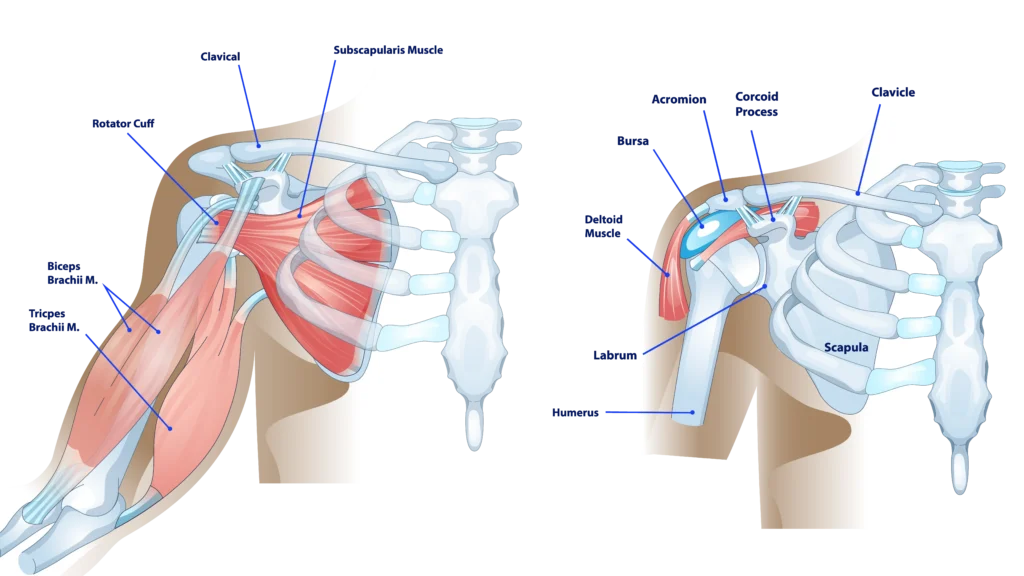
The shoulder is a ball-and-socket joint formed by three bones:
- The humerus, or upper arm bone
- The scapula, or shoulder blade
- The clavicle, or collarbone
The head of the humerus rests against a shallow socket in the shoulder blade called the glenoid. A rim of cartilage called the labrum surrounds the socket and contributes to joint stability.
The rotator cuff is a group of four muscles and tendons that surrounds the joint. These tissues help hold the upper arm bone in place and assist with lifting and rotating the arm. Ligaments, cartilage, and nearby muscles provide additional support.
The shoulder’s structure allows for a wide range of motion. It also means that several different bones, tendons, muscles, and ligaments can contribute to shoulder pain.
When to See a Shoulder Specialist
Shoulder symptoms do not always indicate a serious injury. However, an evaluation may be appropriate when pain or limited motion continues, worsens, or affects normal activities.
Symptoms that may lead someone to see a shoulder specialist include:
- Pain when lifting or rotating the arm
- Pain that interferes with sleep
- Shoulder weakness
- Stiffness or reduced motion
- Clicking, catching, grinding, or popping
- Swelling or bruising after an injury
- A feeling that the shoulder may slip out of place
- Repeated shoulder dislocations
- Difficulty using the arm following a fall
- A visible change in the position or shape of the shoulder
Sudden pain, deformity, numbness, or an inability to move the arm after an injury may require prompt medical evaluation.
Shoulder Conditions Treated
A shoulder examination may include a discussion of symptoms, a physical examination, and imaging when appropriate. Because different shoulder conditions can cause similar symptoms, treatment begins with identifying the structures involved.
Rotator Cuff Tears
A rotator cuff tear occurs when one or more of the tendons surrounding the shoulder become partially or completely torn.
Some tears occur suddenly during a fall, lifting injury, or forceful movement. Others develop gradually as the tendon changes with age or repeated use. Patients may notice pain along the side of the shoulder, weakness, difficulty raising the arm, or discomfort while sleeping.
Not every rotator cuff tear requires surgery. Treatment depends on factors such as the type and size of the tear, the degree of weakness, the condition of the tendon, and the patient’s activity needs.
Options may include physical therapy, activity modification, medication, selected injections, or rotator cuff repair.
Labral Tears
The labrum is a ring of cartilage that surrounds the shoulder socket. It contributes to stability and provides an attachment point for several ligaments and the biceps tendon.
A labral tear may occur during a dislocation, fall, pulling injury, or repetitive overhead activity. Labral tissue can also change over time.
Possible symptoms include deep shoulder pain, clicking, catching, weakness, or a feeling that the shoulder is unstable. Treatment may involve rehabilitation, activity changes, or arthroscopic surgery, depending on the location of the tear and the symptoms it causes.
Shoulder Arthritis
Shoulder arthritis occurs when the cartilage covering the joint surfaces becomes damaged or worn. Without the same cartilage surface between the bones, shoulder movement may become painful or stiff.
Common symptoms include:
- Aching pain within the shoulder
- Stiffness or reduced motion
- Grinding or catching
- Pain during activity
- Pain at rest or during sleep
Treatment may begin with activity modification, physical therapy, medications, or corticosteroid injections. Platelet-rich plasma may be discussed for certain patients, although it is not appropriate for every type or stage of shoulder arthritis.
When symptoms from advanced arthritis continue despite nonsurgical treatment, shoulder replacement may be considered. The condition of the rotator cuff and other structures helps determine whether anatomic total shoulder replacement or reverse shoulder replacement may be appropriate.
Shoulder Instability
Shoulder instability occurs when the upper arm bone moves excessively within the socket. A subluxation is a partial displacement of the joint. A dislocation occurs when the joint surfaces separate completely.
Instability may begin after an injury or develop gradually in people with naturally loose ligaments or repeated overhead activity. A shoulder dislocation can also damage the labrum, ligaments, cartilage, or bone.
Treatment may include physical therapy to strengthen the muscles that support the joint. Surgery may be considered when instability continues, dislocations occur repeatedly, or the supporting structures have been damaged.
Shoulder Fractures
A shoulder fracture may involve the upper portion of the humerus, the shoulder blade, or the collarbone. These injuries may occur during a fall, sports injury, motor vehicle accident, or other direct trauma.
Possible signs of a fracture include:
- Sudden pain
- Swelling or bruising
- Difficulty moving the arm
- Tenderness around the injured area
- A visible change in the shoulder’s position or shape
X-rays are commonly used to identify the fracture and evaluate the position of the bone. Additional imaging may be recommended for certain injuries.
Some shoulder fractures may be treated with a sling, activity restrictions, and follow-up imaging. Surgery may be considered when a fracture is displaced, unstable, or extends into the joint. The treatment recommendation depends on the fracture pattern, bone quality, overall health, and other individual factors.
Nonsurgical Shoulder Treatment Options
Nonsurgical treatment may be considered for many causes of shoulder pain. The recommended approach depends on the diagnosis rather than the presence of pain alone.
Activity Modification
Temporarily adjusting activities may reduce stress on irritated or injured shoulder tissues. Recommendations vary based on the condition and the movements that trigger symptoms.
Physical Therapy
Physical therapy may focus on shoulder motion, strength, posture, stability, and movement patterns. The exercises used for arthritis may differ from those used for instability or a tendon injury.
Medications
Certain medications may be used to manage pain or inflammation. Whether a medication is appropriate depends on the patient’s symptoms, medical history, and other medications.
Corticosteroid Injections
Corticosteroid injections are intended to reduce inflammation in a targeted area. They may be considered for certain causes of shoulder pain, including arthritis or inflammation around the rotator cuff.
An injection does not repair a torn tendon or replace damaged cartilage. The possible benefits and limitations should be discussed before treatment.
Platelet-Rich Plasma Injections
Platelet-rich plasma, or PRP, is prepared from a sample of the patient’s own blood. The sample is processed to concentrate the platelets before the solution is injected into the treatment area.
PRP may be considered for certain tendon conditions and other selected causes of shoulder pain. It is not appropriate for every patient or diagnosis. The role of PRP depends on the injured tissue, the extent of the condition, previous treatment, and the available clinical evidence.
Surgical Shoulder Treatment Options
Surgery may be discussed when a shoulder condition continues to cause symptoms despite nonsurgical treatment or when an injury is unlikely to heal adequately without surgical care.
The type of surgery depends on the structures involved and may include arthroscopy, tendon repair, stabilization, fracture fixation, or shoulder replacement.
Shoulder Arthroscopy
Shoulder arthroscopy uses a small camera and surgical instruments inserted through small incisions. The camera allows the surgeon to examine structures inside the shoulder and perform certain procedures.
Depending on the diagnosis, arthroscopy may be used for:
- Rotator cuff repair
- Labral repair
- Shoulder stabilization
- Treatment of certain biceps tendon conditions
- Evaluation or treatment of damaged cartilage
Arthroscopy describes the surgical approach. Recovery depends on the procedure performed and whether tissue was repaired.
Rotator Cuff Repair
Rotator cuff repair may be considered for certain partial or complete tendon tears. During the procedure, the torn tendon is typically reattached to the upper arm bone.
The repair requires time to heal. Rehabilitation generally progresses in stages, beginning with protection of the tendon and followed by gradual work on motion and strength.
Shoulder Stabilization
Shoulder stabilization surgery may be considered for repeated dislocations or ongoing instability. The procedure may involve repairing the labrum or ligaments. Some patients may also require treatment of bone loss caused by previous dislocations.
The recommended procedure depends on the direction of instability, the extent of tissue damage, and the patient’s activity needs.
Shoulder Fracture Surgery
Surgical treatment may be considered when the fractured bone is not in an acceptable position or the injury affects the stability of the shoulder joint. Plates, screws, sutures, or other devices may be used depending on the fracture.
In some complex upper arm fractures, shoulder replacement may be discussed. The decision depends on the fracture pattern, bone quality, rotator cuff, age, and overall health.
Total Shoulder Replacement
Total shoulder replacement follows the shoulder’s natural structure. The damaged head of the upper arm bone is replaced with a metal component, and the socket is resurfaced with a plastic component.
A functioning rotator cuff is generally important for this type of replacement.
Reverse Shoulder Replacement
Reverse shoulder replacement changes the position of the ball and socket components. The implant design allows the deltoid muscle to contribute more to raising the arm.
This procedure may be considered for certain patients with severe rotator cuff damage, rotator cuff tear arthropathy, complex fractures, or other shoulder conditions.
The type of shoulder replacement, if any, depends on the diagnosis, condition of the rotator cuff, bone quality, prior surgery, and other individual factors.
Recovery After Shoulder Treatment
Recovery varies based on the condition and treatment selected. Physical therapy, an injection, arthroscopic surgery, tendon repair, fracture treatment, and shoulder replacement each have different timelines and restrictions.
A recovery plan may include:
- Temporary activity restrictions
- A sling after certain injuries or procedures
- Medication for postoperative discomfort
- Home exercises
- Supervised physical therapy
- Follow-up examinations
- Follow-up imaging when appropriate
- A gradual return to work, recreation, or sports
After a tendon or labral repair, the repaired tissue typically requires a period of protection before strengthening begins. Fractures also require time for the bone to heal.
Progress is evaluated throughout recovery. Timelines may change based on healing, symptoms, the procedure performed, and the physical demands of the patient’s activities.
Summary
Shoulder pain can come from the joint, tendons, muscles, ligaments, cartilage, or bone. Because several conditions can produce similar symptoms, an evaluation may help determine which structures are involved and what treatment options may be considered.
Dr. Thomas Freeman evaluates and treats shoulder injuries and degenerative conditions in adult and pediatric patients. Recommendations are based on the diagnosis, imaging findings, symptoms, overall health, and individual goals.