


Medically reviewed by Thomas Freeman, MD
Most of the MCL injuries I see arrive with a story attached. A ski that kept turning after the leg had given up on it. A tackle that caught the outside of a planted knee. A slip on an icy driveway where the foot went one way and the body went another. From there, it’s time to figure out what the treatment and recovery timeline looks like. MCL tear grades are where that answer starts, because the grade describes how much of the ligament actually failed. Here I’ll walk through what each grade means, what recovery tends to look like, and when an injured MCL turns out not to be the whole story.
Key Takeaways
- MCL injuries are graded one through three, based on how much of the ligament is torn and how far the inside of the knee opens on exam.
- Most isolated MCL injuries heal without surgery, including many complete tears, because the ligament has a good blood supply.
- The grade sets a general timeline. Readiness is judged on how the knee behaves, not on the calendar.
What the MCL Does
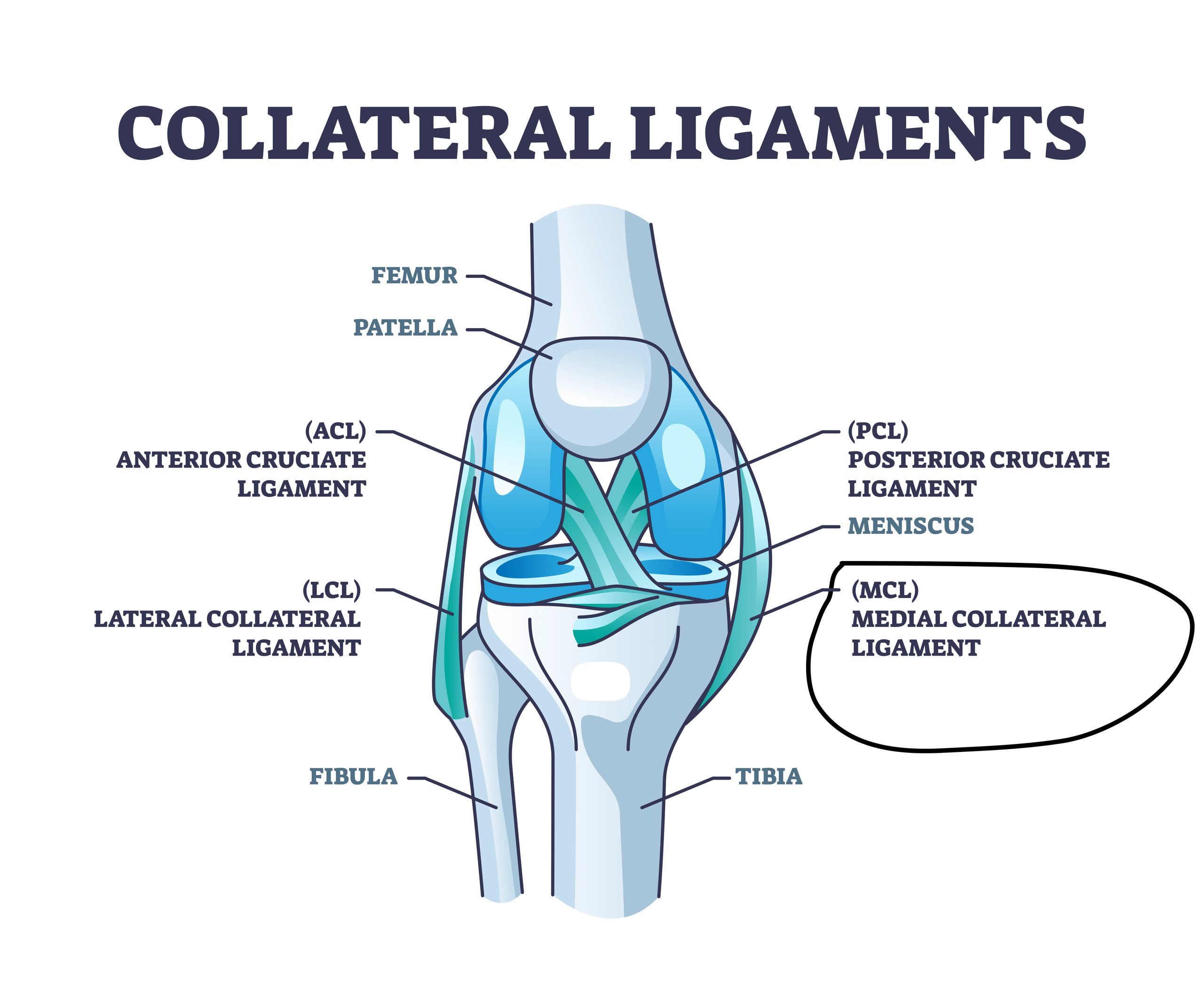
The medial collateral ligament, or MCL, runs along the inner side of the knee. It connects the femur to the tibia, and its job is to resist forces that push the knee inward. That happens when something strikes the outside of the leg, or when the foot plants and the body rotates over it.
The ligament has two layers. A broad superficial layer does most of the stabilizing work. A deeper layer sits closer to the joint and attaches to the medial meniscus. That attachment matters more than patients expect, because an injury forceful enough to damage the deep layer can involve the meniscus too.
Of the four main ligaments in the knee, the MCL is the one my patients most often underestimate. The early pain fades faster than the ligament heals.
How MCL Tear Grades Are Assigned
Grading comes from the physical exam. I apply gentle inward pressure with the knee slightly bent, and I am feeling for two things: how far the joint opens, and whether it stops firmly.
A grade 1 injury means the fibers were stretched and some were disrupted. The ligament is still continuous. The inner knee is tender and sometimes swollen, but the joint does not open meaningfully when tested.
A grade 2 injury is a partial tear. The knee opens somewhat under stress, then stops against a firm endpoint. That endpoint tells me intact fibers are still holding. Grade 2 injuries can be the most painful of the three.
A grade 3 injury is a complete tear. The joint opens clearly and the stop feels soft or absent. A complete tear may actually hurt less than a partial one, because no partially torn fibers are being pulled on. I have had patients walk into clinic on a completely torn MCL, convinced it was minor, precisely because it stopped hurting.
MRI is not always necessary here, since the exam usually tells the story. I order it when the exam is unclear, when swelling makes a reliable exam impossible, or when I suspect something else is injured alongside it.
Why the MCL Often Heals on Its Own
The MCL sits outside the joint capsule in a well-vascularized area. That blood supply is why it behaves so differently from the ACL. A torn ACL sits inside the joint, bathed in joint fluid, and typically does not reattach and heal. An MCL usually can, given protection and time.
That difference shapes the whole treatment conversation. With most knee ligament injuries on the medial side, the question is not whether to reconstruct the ligament. It is how to protect it while it does the work itself.
What Recovery Tends to Look Like at Each Grade
These ranges are general patterns, not promises, and individual recovery varies.
A grade 1 injury often settles within a couple of weeks. Motion starts right away, swelling gets managed early, and most patients move back toward normal activity as the tenderness resolves.
A grade 2 injury commonly takes several weeks, often around four to six. I usually put these patients in a hinged brace, which allows bending and straightening while blocking the inward stress the ligament cannot yet tolerate.
A grade 3 injury generally needs six weeks or more of protection. Return to cutting and pivoting sports is measured in months rather than weeks. Bracing runs longer, therapy runs longer, and the strength work matters more.
Recovery should not be based on time alone. I look at how the ligament feels on exam, whether the quadriceps has come back, and how the knee tolerates the movements a patient is trying to return to. An athlete who hits six weeks with a knee that still opens on exam is not ready.
When an MCL Injury Isn’t Just an MCL Injury
This is a key part of every MCL tear conversation. The MCL rarely fails alone when the force is high.
A knee that swelled dramatically within a few hours concerns me. An MCL injury sits outside the joint and does not usually cause that much bleeding inside it. Rapid swelling suggests something inside the joint was injured, and the ACL and meniscus are the usual candidates.
A giving-way sensation weeks later is the other flag. A healing MCL does not typically make the knee buckle during a turn. That symptom points toward rotational instability, which is a different problem.
There is also an uncommon pattern where the torn end of the ligament ends up displaced. It can then fail to heal where it needs to. That is one reason I re-examine these injuries rather than assuming a grade 3 is simply on a fixed timeline.
What I See in My Patients
Northern Michigan gives these injuries a season. From December through March, my MCL patients come largely off the ski hills. The mechanism repeats itself with remarkable consistency: an edge catches, the ski keeps carving, the knee gets forced inward. Beginners tend to arrive with grade 1 and 2 injuries from low-speed falls. Stronger skiers arrive with higher grades from higher speeds.
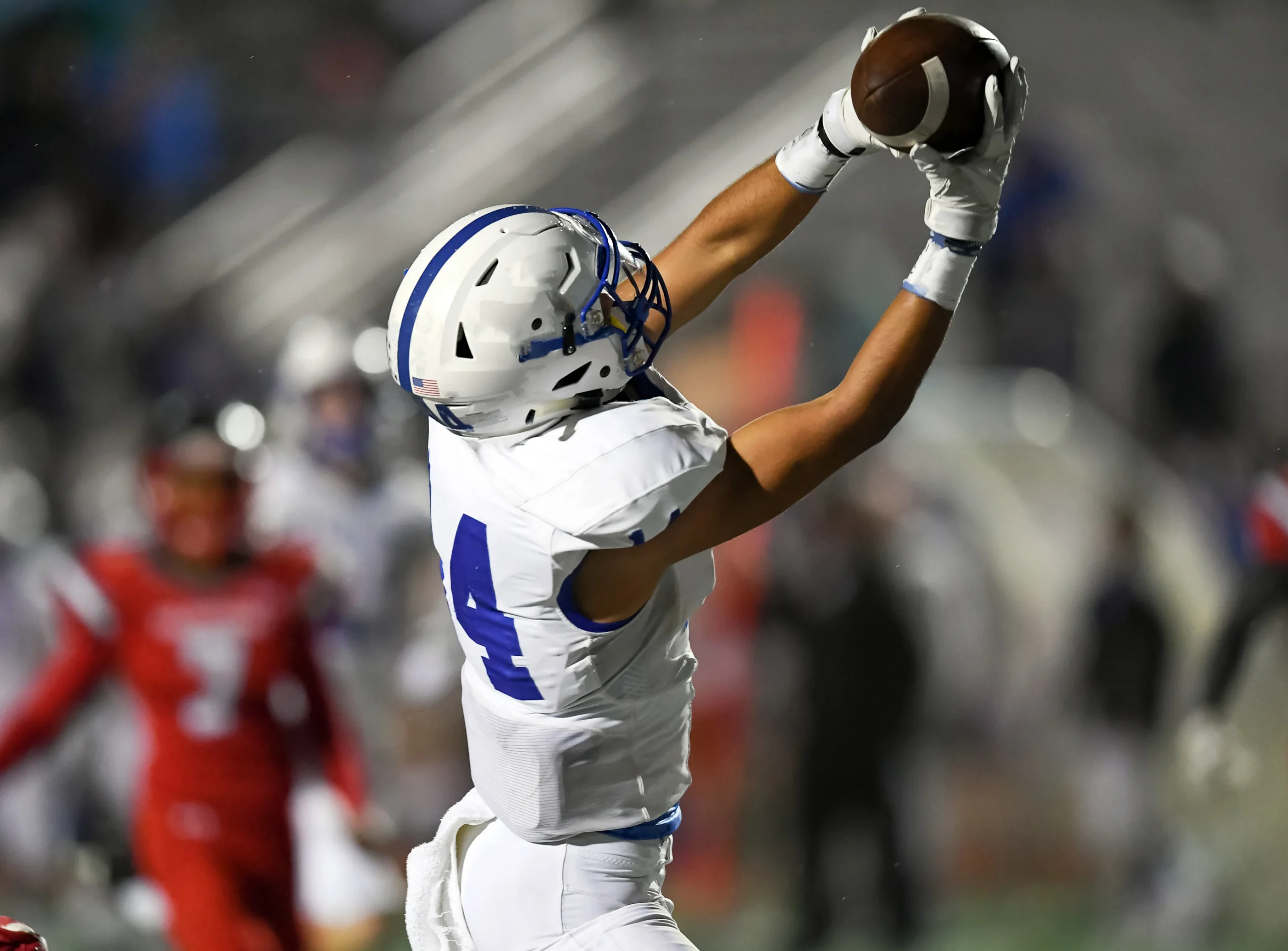
The rest of the year looks different. Fall brings football knees from contact to the outside of the leg. Summer brings soccer, adult rec leagues, and the occasional boatyard injury where someone got pinned against something that did not move.
The pattern I push back on most is the patient who feels better at three weeks and treats that as the finish line. Pain resolving and a ligament healing are two different timelines.
How I Treat MCL Injuries
My starting position with an isolated MCL injury is non-surgical. That holds across all three grades far more often than patients expect walking in.
For a grade 1, I focus on controlling swelling, restoring full motion early, and getting the quadriceps working. Stiffness is a bigger risk than re-injury at this grade.
For grades 2 and 3, I add a hinged brace. The brace is doing something specific. It lets the knee bend and straighten normally while shielding the ligament from sideways stress. Motion during healing is a priority for me, because a knee immobilized straight for weeks heals into a stiffness problem.
Physical therapy runs through the whole thing. Early work restores motion and calms the knee down. The later work is strength and control, especially hip and quadriceps, and that determines whether someone gets back on skis without the knee feeling untrustworthy.
Surgery enters the conversation in specific situations rather than as a general option. It may be considered in these cases:
- A complete tear that has not healed and leaves the knee unstable months later.
- An injury where the ligament pulled off with a fragment of bone or ended up displaced.
- A knee where the MCL is one part of a multi-ligament injury.
Summary
MCL tear grades describe how much of the ligament failed: stretched fibers that still hold, a partial tear with a firm endpoint, or a complete tear where the knee opens freely. The grade guides the timeline and the bracing, and most isolated MCL injuries heal without surgery. The ones needing closer attention come with rapid swelling, a giving-way feeling, or a knee still unstable after the expected healing window.
If you injured the inside of your knee, bring one clear answer to your appointment: does the knee feel unstable, or does it just hurt? Those two answers send the exam in different directions. You can request an appointment online or call the office at (231) 935-0900.
Frequently Asked Questions
Can a grade 3 MCL tear heal without surgery?
Often, yes. A complete MCL tear has a good blood supply and may heal with a hinged brace, protected activity, and therapy. Surgery is generally reserved for a few situations: tears that fail to heal and leave the knee unstable, injuries where the ligament ends up displaced or pulls off with bone, and MCL tears that are part of a larger multi-ligament injury.
How long should I wear a brace after an MCL injury?
It depends on the grade. Grade 1 injuries usually do not require a brace at all. Grade 2 injuries commonly involve a hinged brace for several weeks. Grade 3 injuries may need six weeks or more. These are general ranges, and I adjust them based on how the knee examines.
Why does my grade 2 tear hurt more than my friend’s grade 3?
A partial tear leaves intact fibers being stretched and irritated with movement. That can generate more pain than a ligament that tore completely. Pain level is a poor way to judge severity, which is why the exam matters.
Can I ski again after an MCL tear?
Many patients do. The timing depends on the grade, on how the ligament heals, and on whether quadriceps and hip strength have come back enough to control the knee on uneven terrain. I make that call based on strength, stability, and sport-specific movement, not on a fixed number of weeks.
How do I know if I tore my ACL instead of my MCL?
The clues that push me toward the ACL are a pop at the moment of injury, substantial swelling within a few hours, and a giving-way sensation when turning. MCL injuries tend to produce tenderness along the inner side of the knee and pain with sideways stress. An exam, and often an MRI, sorts it out.