
Medically reviewed by Thomas Freeman, MD | Reviewed August 2026
An ACL takes a second to tear. The recovery takes the better part of a year. That gap is the hardest thing to explain to a seventeen-year-old sitting on my exam table in a knee immobilizer, and it is usually the first thing we talk about. During my sports medicine fellowship at the University of Michigan, I covered football sidelines where I saw many ACL injuries. In this post, I’ll explain ACL tears in athletes, including what the recovery and return to sport timeline really looks like.
Key Takeaways
- An ACL tear often happens without contact, during a cut, a landing, or a sudden stop.
- Not every ACL tear requires surgery, though reconstruction is commonly discussed for athletes returning to cutting and pivoting sports.
- Return to sport should be based on strength, movement control, and functional testing rather than a date on the calendar.
How an ACL Tear Actually Happens
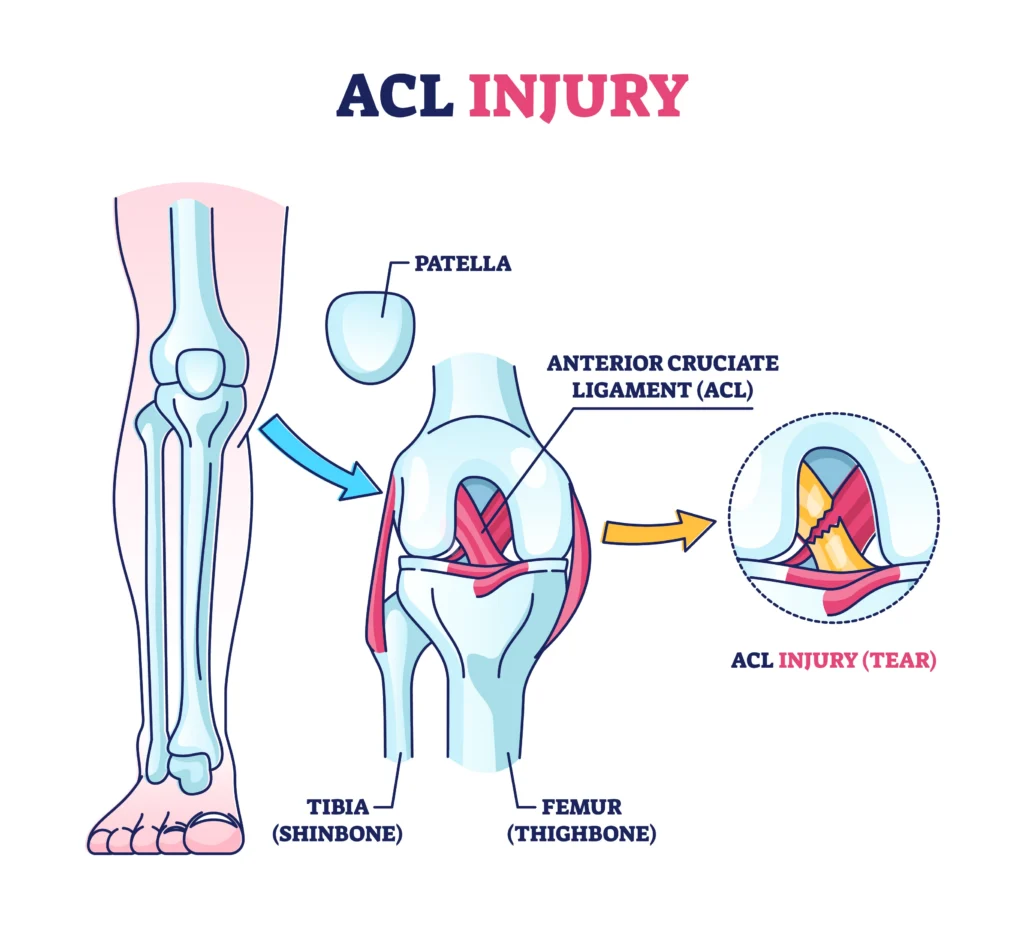
The anterior cruciate ligament (ACL) runs diagonally through the middle of the knee and helps control forward movement and rotation of the tibia. It is not a large structure, and it does a disproportionate amount of work.
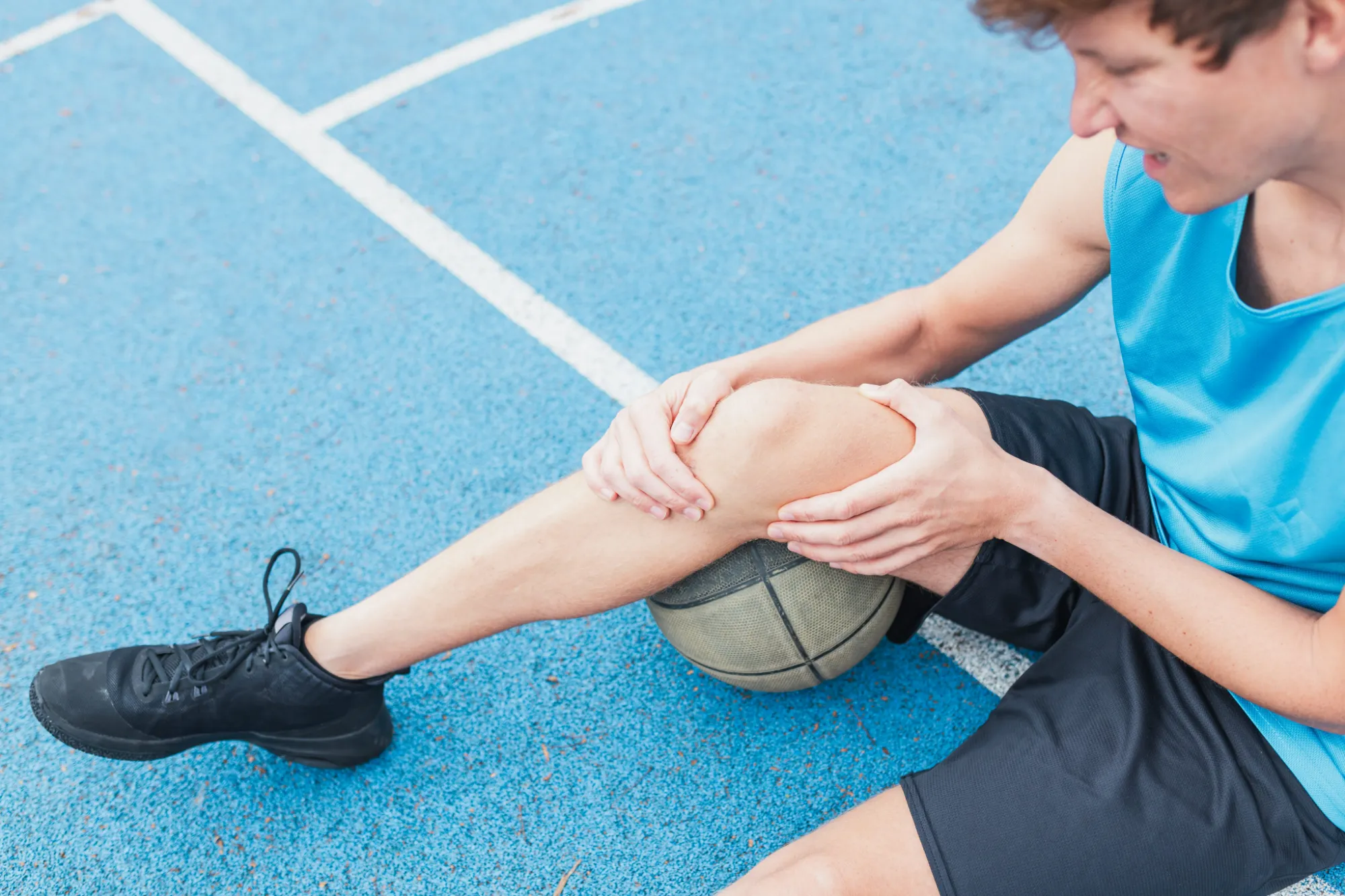
Most tears I see happen during a sudden change in direction, an awkward landing, a rapid stop, or a direct collision. The non-contact versions surprise people the most. An athlete plants a foot, the body rotates over a knee that stays put, and the ligament fails before anyone touches them.
What the Injury Feels Like
Certain patterns come up in my exam room over and over.
The first is the pop. Many patients hear or feel it at the moment of injury, and they usually describe it without prompting because it was memorable. Not everyone experiences it, so its absence does not rule anything out.
The second is the swelling pattern. A knee that balloons within a few hours after a twisting injury tells me something bled inside the joint, and the ACL is one of the more common reasons that happens. Swelling that creeps in slowly over two or three days generally points somewhere else.
A symptom that brings athletes back weeks later is instability. The knee feels fine walking in a straight line, then gives way the first time they try to turn or change direction. That giving-way sensation is the one I take most seriously, because it means the knee is not controlling rotation the way it should.
How the Diagnosis Gets Made
Diagnosis starts with a conversation about exactly how the injury happened, followed by a physical examination that tests how far and how easily the tibia shifts forward relative to the femur. A knee with a torn ACL moves differently under the examiner’s hands, and an experienced exam catches most of these.
X-rays come next. They do not show the ligament itself, but they rule out fractures and, in younger athletes, tell me whether the growth plates are still open. That single detail can change the entire surgical plan.
MRI shows the ligament directly and, just as importantly, shows what else got injured at the same time. ACL tears frequently travel with meniscus tears, cartilage damage, or injury to another ligament. Knowing the full picture before surgery matters far more than confirming what the exam already suggested.
Surgery Is Not Automatic
Some ACL injuries can be managed with physical therapy, bracing, and activity changes, particularly when the tear is partial, the knee feels stable, and the patient’s activities do not demand hard pivoting. I have patients doing well years out without a reconstruction.
Reconstruction enters the conversation when instability continues or when someone plans to return to activities built around cutting, pivoting, and rapid changes in direction. The decision depends on whether the ACL is partially or completely torn, how unstable the knee is, what else is injured inside it, the athlete’s age and skeletal maturity, their sport, and their own goals.
I will also say plainly what an ACL cannot be fixed with. Patients ask me about PRP for the knee fairly often, and while PRP may have a role in selected knee conditions, it cannot reconstruct a torn ligament.
What I See in My Patients
Northern Michigan gives me a seasonal rhythm with these injuries. Fall brings football and soccer knees. Winter brings skiers off Crystal Mountain and Boyne, usually from a fall where the ski stayed committed to a turn the leg had already abandoned. Spring and summer bring lacrosse, basketball, and the adult recreational athletes who discovered their pickup game moves faster than their knee does.
My Approach to ACL Reconstruction
During reconstruction, the damaged ACL is replaced with a tissue graft, which may come from the patient or from a donor. Graft choice depends on age, anatomy, activity level, sport, and other individual factors.
Surgical technique in ACL reconstruction is something I have spent real time on outside the operating room. I co-authored a study published in The Knee examining how orthopaedic surgeons approach femoral tunnel drilling in ACL reconstruction. We found that technique varies from surgeon to surgeon. Tunnel position affects how the graft behaves, so it is a step I consider carefully.
If the meniscus, cartilage, or another ligament is also injured, I may address those structures during the same procedure. Preserving meniscus tissue when the tear pattern allows repair is a priority for me, since the meniscus is doing load-sharing work that the knee will need for decades.
Recovery and Return to Sport
Rehabilitation after ACL reconstruction moves through stages. Early work focuses on restoring full knee extension, calming swelling, and waking the quadriceps back up. Strength and neuromuscular control come next. Running, then cutting, then sport-specific movement come after that, in that order.
Recovery should not be based on time alone. I clear athletes based on healing, strength, movement control, and functional testing, which means measuring the reconstructed leg against the healthy one rather than counting weeks. An athlete who looks great on the calendar but shows a meaningful strength deficit is not ready, and I will say so.
Return to sport is measured in months, not weeks, and it takes longer than most athletes expect going in. No specific recovery time or level of function can be guaranteed, and anyone giving you a firm date before surgery is guessing.
Physical therapy carries most of this. The athletes who do best are the ones who treat rehab as the actual treatment rather than as the thing that happens after the treatment.
Summary
An ACL tear disrupts a small ligament that controls rotation, and it usually announces itself with a pop, rapid swelling, and later a feeling that the knee gives way when turning. Some tears are managed without surgery. Many athletes returning to cutting and pivoting sports pursue reconstruction, with graft choice and any associated meniscus or cartilage work planned individually.
If your knee swelled within hours of a twisting injury, get it evaluated before the swelling resolves and convinces you it was nothing. When you come in, bring a straightforward answer to one question: what specific movement does the knee refuse to do? Turning, decelerating, and landing each point somewhere different, and that answer shapes both my exam and the imaging I order. You can request an appointment online or call the office at (231) 935-0900.
Frequently Asked Questions
Can an ACL tear heal without surgery?
A completely torn ACL does not typically reattach and heal on its own. Some patients function well without reconstruction through physical therapy, bracing, and activity modification, particularly when the knee feels stable and their activities do not involve heavy pivoting.
How soon after an ACL tear should surgery happen?
Timing varies. Many surgeons, myself included, prefer that swelling settle and knee motion return before reconstruction, since operating on a stiff, swollen knee can make regaining motion afterward harder. Associated injuries may change that timing.
Will I be able to return to my sport?
Many athletes do return, though it depends on the sport, the associated injuries, rehabilitation, and how the knee performs on functional testing. Timelines may vary significantly between patients.
Is a donor graft as good as using my own tissue?
Both are used regularly and both have tradeoffs. Graft selection depends on age, anatomy, sport, and activity demands, and it is a conversation I have individually with each patient rather than a default I apply to everyone.