
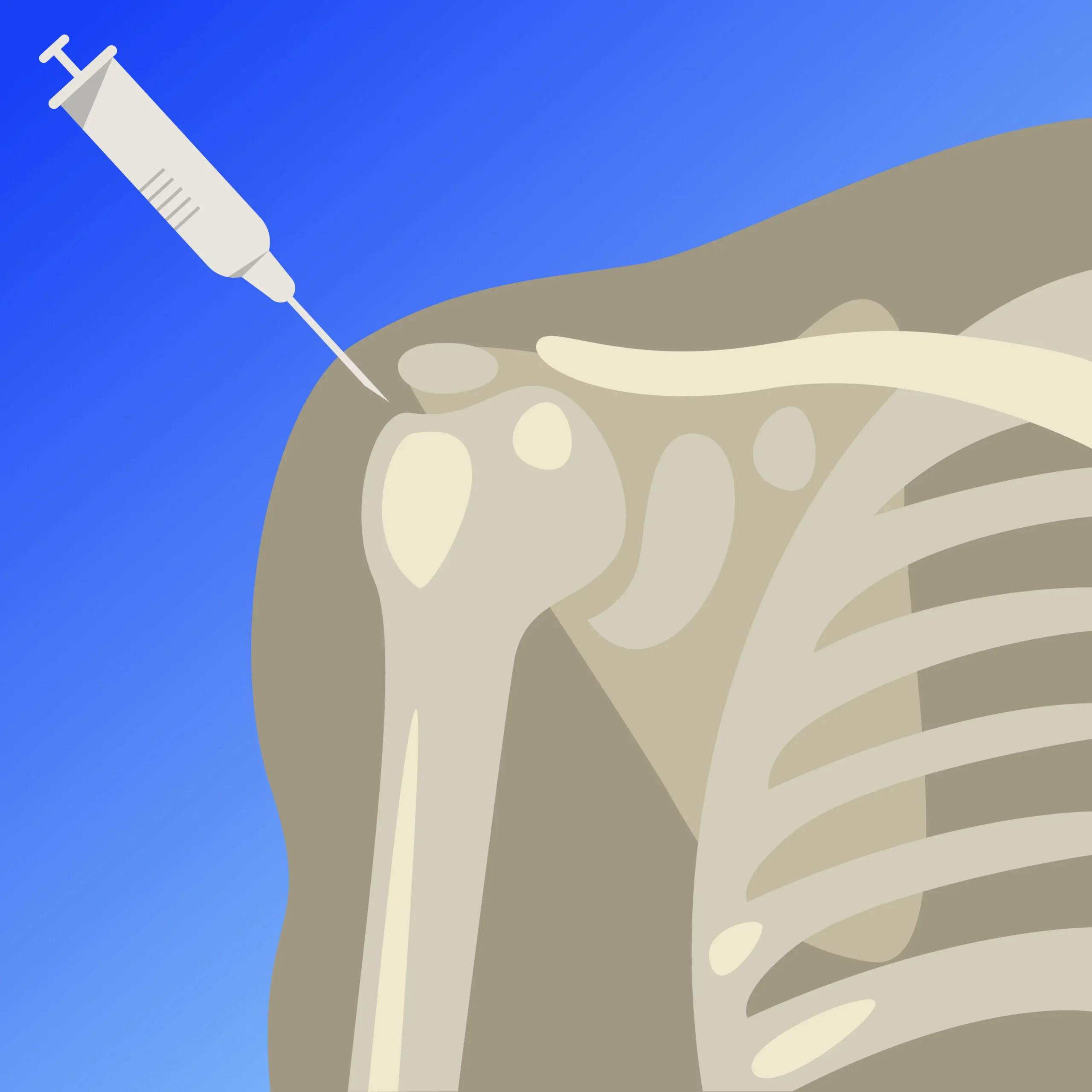
PRP FOR THE SHOULDER
Our Services

Please call us at
(231) 935-0900
for an appointment
Shoulder pain may come from a tendon, muscle, joint surface, ligament, or other structure. Because these conditions do not all respond to the same treatment, an accurate diagnosis is needed before an injection is considered.
Platelet-rich plasma, or PRP, is prepared from a sample of the patient’s own blood. It may be considered as part of a treatment plan for selected shoulder tendon conditions, partial rotator cuff tears, and other causes of shoulder pain.
Dr. Thomas Freeman is a board-certified orthopedic surgeon with fellowship training in sports medicine and shoulder surgery. He evaluates the condition of the shoulder, previous treatment, symptoms, health history, and available clinical evidence before discussing PRP.
Dr. Freeman sees patients from Traverse City, Northern Michigan, and communities throughout the Great Lakes region.
Understanding the Shoulder
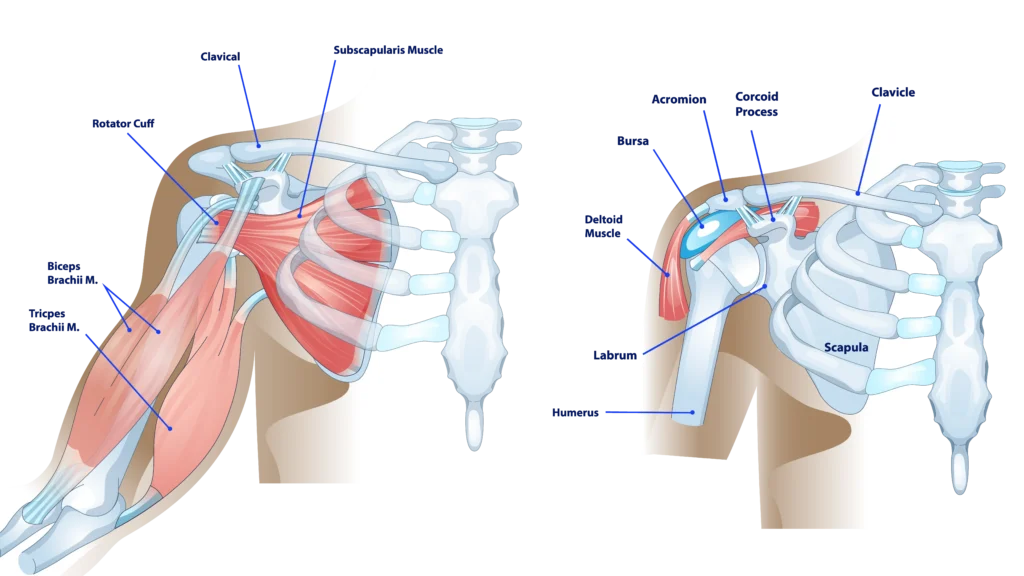
The shoulder is made up of several joints, muscles, tendons, ligaments, and cartilage structures. The main shoulder joint is called the glenohumeral joint.
This ball-and-socket joint is formed by:
- The humeral head at the top of the upper arm bone
- The glenoid, which is a shallow socket in the shoulder blade
The glenoid is much smaller than the humeral head. This structure allows the shoulder to move in many directions, but it also means that the joint depends on the surrounding soft tissues for support.
The rotator cuff is a group of four muscles and their tendons:
- Supraspinatus
- Infraspinatus
- Teres minor
- Subscapularis
These tissues help keep the humeral head centered against the glenoid. They also assist with lifting and rotating the arm.
Rotator cuff tendons can become irritated, weakened, or torn. These changes may occur after an injury or develop gradually over time. Articular cartilage covers the surfaces of the humeral head and glenoid. It creates a smooth surface that allows the bones to move against one another with limited friction.
Shoulder arthritis develops when this cartilage becomes damaged or worn. PRP cannot replace cartilage that has been lost. The labrum is a ring of cartilage around the edge of the glenoid. It deepens the socket and contributes to shoulder stability.
A labral tear is different from a rotator cuff tear. PRP is not a mechanical repair for torn labral tissue.
What Is PRP?
PRP stands for platelet-rich plasma. It is an orthobiologic treatment prepared from the patient’s blood.
Blood contains plasma, red blood cells, white blood cells, and platelets. Platelets are involved in clotting and contain proteins that participate in the body’s response to tissue injury.
To prepare PRP, a blood sample is processed to separate and concentrate the platelet-containing portion. The resulting solution is then injected into a selected area of the shoulder.
PRP formulations can differ in platelet concentration, white blood cell content, and total volume. Researchers continue to study how these differences may affect treatment.
PRP is sometimes described as a regenerative treatment. This does not mean that it can reliably regrow cartilage, reconnect a completely torn tendon, or return damaged tissue to its original condition.
Shoulder Conditions Treated
PRP has been studied for several shoulder conditions. The amount and quality of evidence differ by diagnosis. It is not appropriate for every patient with shoulder pain.
Rotator Cuff Tendinopathy
Rotator cuff tendinopathy describes changes within one or more rotator cuff tendons. It may be associated with pain when lifting or rotating the arm, weakness, and discomfort while sleeping.
Treatment often begins with activity modification and physical therapy. PRP may be discussed when symptoms continue and the diagnosis is appropriate.
A response cannot be predicted, and some patients may not experience a meaningful change following treatment.
Partial Rotator Cuff Tears
A partial rotator cuff tear affects part of the tendon’s thickness. The tendon remains partially connected to the bone.
PRP may be considered for selected partial tears. The decision depends on:
- The location and depth of the tear
- The tendon involved
- The quality of the remaining tissue
- Shoulder strength
- Duration of symptoms
- Activity needs
- Previous treatment
PRP cannot mechanically close a tear. A partial tear may also progress regardless of whether an injection is performed.
Complete Rotator Cuff Tears
A complete tear extends through the full thickness of the tendon. The tendon may also pull away from its attachment to the bone.
PRP cannot reconnect a detached tendon. Treatment options depend on the tear’s size, tendon quality, weakness, symptoms, activity needs, age, and other factors.
Some complete tears may be managed without surgery, while others may require surgical evaluation. PRP should not be presented as a replacement for rotator cuff repair when mechanical repair is indicated.
Shoulder Arthritis
Shoulder arthritis occurs when the cartilage covering the joint surfaces becomes damaged or worn. Symptoms may include pain, stiffness, grinding, reduced motion, and night pain.
PRP has been studied for shoulder arthritis, but the evidence is more limited than it is for certain other orthopedic conditions. PRP cannot restore cartilage that has been lost or correct changes in the shape of the joint.
Whether PRP is discussed may depend on:
- The type and stage of arthritis
- Severity of symptoms
- Shoulder motion
- Rotator cuff condition
- Previous treatment
- Medical history
- Patient preferences
Other options may include physical therapy, medication, corticosteroid injection, activity modification, Total Shoulder Replacement, or Reverse Shoulder Replacement.
Frozen Shoulder
Frozen shoulder, also called adhesive capsulitis, causes pain and progressive loss of shoulder motion. The joint capsule becomes thickened and tight.
PRP has been studied as a possible treatment for frozen shoulder, but research remains limited. It is not considered an established treatment for every patient with this condition.
Common treatment options may include physical therapy, home exercises, medication, corticosteroid injection, or other procedures. Treatment depends on the stage and severity of the condition.
Other Shoulder Tendon Conditions
PRP may be discussed for other selected tendon conditions around the shoulder. The exact location of the pain should be identified before treatment because symptoms can come from the rotator cuff, biceps tendon, joint, neck, or other structures.
When May PRP for the Shoulder Be Considered?
PRP may be considered when a patient has a confirmed shoulder condition for which the treatment has been studied.
Factors Dr. Freeman may consider include:
- The specific diagnosis
- Duration of symptoms
- Extent of tendon or joint damage
- Strength and shoulder motion
- Previous treatment
- Medical history
- Current medications
- Work or sport demands
- Patient goals
- Available clinical evidence
PRP should not be recommended based only on the location of pain. Two patients with similar symptoms may have different shoulder conditions and require different treatment plans.
What Happens During a Shoulder PRP Injection?
A PRP treatment appointment generally includes several steps.
Blood Collection
A healthcare professional draws a sample of blood from the patient’s arm.
PRP Preparation
The blood is placed into a centrifuge. The centrifuge separates the blood into different components. The platelet-containing portion is collected and prepared for injection.
Identifying the Treatment Area
Dr. Freeman identifies the area to be treated based on the examination and imaging. Ultrasound guidance may be used when appropriate to guide the needle toward the selected tendon, joint, or other structure.
Injection
The treatment area is cleaned, and the PRP solution is injected. Patients may experience pressure or discomfort during the injection.
A bandage is placed over the injection site. Patients then receive instructions regarding activity, medication, and follow-up care.
How Many Shoulder PRP Injections Are Needed?
There is no standard number of injections for every shoulder condition. Some treatment plans may involve one injection, while others may involve more than one.
The number and timing depend on:
- The condition being treated
- Available clinical evidence
- PRP preparation
- Previous treatment
- Response to an initial injection
- Dr. Freeman’s recommendation
More injections do not necessarily produce a different or better result. No treatment series should be assumed before an evaluation.
Recovery After a Shoulder PRP Injection
Recovery varies based on the condition treated, injection location, and individual response.
Pain, soreness, stiffness, or swelling may occur after the injection. Symptoms may temporarily feel different or more noticeable before returning to their previous level.
Post-injection instructions may include:
- Temporarily limiting strenuous shoulder activity
- Avoiding heavy or repetitive lifting
- Following instructions regarding ice or heat
- Following medication guidance
- Beginning or resuming exercises at the recommended time
- Attending physical therapy when prescribed
- Returning for follow-up evaluation
- Reporting unexpected or worsening symptoms
Light lower-body activity may be permitted, but patients should follow their specific instructions. General recommendations do not apply to every shoulder condition.
Summary
PRP may be one option for selected shoulder tendon conditions, partial rotator cuff tears, or other causes of shoulder pain. It is not appropriate for every patient or every diagnosis.
Dr. Freeman evaluates the shoulder before discussing treatment. Recommendations may include activity modification, physical therapy, medication, corticosteroid injection, PRP, surgery, or another option.